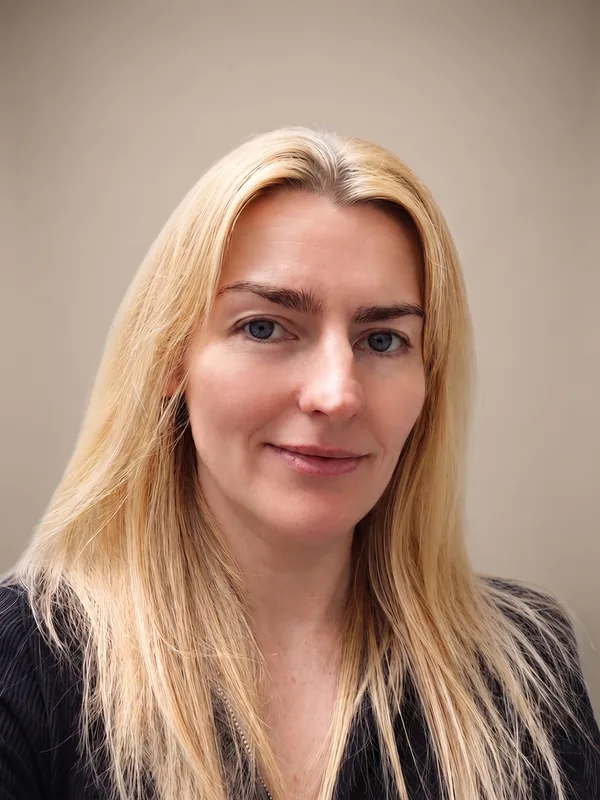






Dr. Jason Tan
Psychiatrist
Specializes in adult psychiatry, neuropsychiatry, anxiety, depression and phobia treatments. “I am passionate about improving the integration of physical and mental health services.”
Millions of people are prescribed antidepressants every year and then left to work out the hardest part on their own. withClaro exists to close that gap between what your prescription says and what actually happens to you.
42%
discontinue antidepressants within 30 days
Olfson et al., 2006
62%
of withClaro users come to understand what's happening on their antidepressant
App onboarding — “What brought you to withClaro”
9
clinical advisors
Psychiatrists, nurse practitioner, neuroscientist, and specialist advisors

withClaro is a self-monitoring and communication app for people taking antidepressants. It helps you track what is changing — mood, sleep, side effects, energy, how you are functioning — and turns that into something you can actually understand, and something your doctor can actually use.
It is built specifically around how antidepressant treatment works: week by week, dose by dose. The first two weeks of a new prescription behave differently from month twelve. Tapering behaves differently again. Claro knows which of those phases you are in and changes what it asks and what it shows you accordingly.
There is a blind spot in mental healthcare, and it sits exactly where treatment actually happens: between appointments.
An antidepressant is not a painkiller. Side effects usually peak in the first one to two weeks, while the therapeutic effect takes four weeks to become noticeable and six to twelve to fully arrive. Someone who started medication for anxiety and feels more anxious by day five draws the obvious conclusion — this isn’t working — and stops.
Around 42% of people discontinue within the first 30 days and 72% within 90. In a UK survey of 752 people, only 9% of those who stopped had done so in agreement with their doctor. Roughly one in five people who show no response by week four will respond if they keep going.
Patients don't know whether what they're feeling is normal. Clinicians don't know what happened between visits. Both problems have the same root — nobody is capturing the weeks in between. That is the only problem withClaro is trying to solve.
Most mental health apps are diaries. You tick boxes, then try to assemble the meaning yourself. Claro collects weak, scattered signals and tries to turn them into a coherent picture.
What Claro pays attention to
Side effects
Structured checklists and free description, plus how much distress each one is causing and whether it is following a typical early-treatment trajectory.
Mood and affect
Daily scores tracked as direction and trend, with PHQ-9 and GAD-7 as a moving line rather than a single reading.
Sleep
Duration, quality, and consistency, including Apple Health data. Sleep often shifts before mood does.
Functioning
Work, study, relationships, basic self-care.
Medication chronology
Every dose taken, missed, or delayed, and every dose change with its date.
Safety signals
Recognised across languages by meaning rather than keyword, with every flag mapped to a clinical source and an escalation route.
Rather than a flat good-or-bad reading, Claro continually re-checks which recognisable phase of treatment you appear to be in. These are working hypotheses based on trajectories, not labels applied to a single bad day. Clinical logic lives in reviewable decision tables our advisors can inspect — not buried inside a model. When there isn’t enough data to say something useful, the system is designed to say less rather than guess.
This is the most important part of how we are built, so we state it plainly rather than bury it in a disclaimer.
If an AI product starts acting as a parallel clinician, it doesn’t close the gap in care — it adds another layer the doctor cannot see. withClaro is designed to strengthen the treatment you already have, never to stand in for it.
withClaro is reviewed at every layer by practising clinicians. They shape the tapering methodology, the patient-facing copy, our safety boundaries, and how we explain the biology.

We read everything people send us, and a meaningful amount of the product exists because someone wrote in. Questions and problems go to our support team.
[email protected]
withClaro is designed to be transparent to the people treating our users — you can see what your patient sees. To understand how it works, or talk about using it in your practice, start with the partner program.
withClaro partner program →
We're happy to talk, including about the parts that are still unfinished.
[email protected]withClaro is operated by Pink Elephant, Unipessoal Lda (NIPC 519056582), registered in Portugal, with its registered office at Edifício Amoreiras Square, Rua Carlos Alberto da Mota Pinto, no. 17, second floor, 1070-313 Lisboa, Portugal.
Sources for the clinical claims on this page. Unconfirmed figures are not published here.
Ready for calmer clarity between appointments?
Download withClaro